What to check before putting resin patio chairs away for the season
Resin outdoor furniture is built for changing weather, but it still benefits from a little attention before a quiet stretch in the shed, garage, or covered patio. A few careful checks can help prevent stains, warping, scratched finishes, and musty smells from turning into bigger problems later. The aim is not to make the job complicated. It is to catch the small things while they are still easy to handle.
Start with the surface
Look over each seat, back, arm, and leg in good light. Resin can hold onto pollen, bird droppings, sunscreen, food residue, and fine dirt in textured areas. A soft brush helps lift grit from seams and carved details before wiping, because dragging grit across the surface can leave marks. Use mild soap and water, then rinse well and let the pieces dry fully. Avoid harsh solvents or abrasive pads, which can dull the finish or leave cloudy patches.
Pay attention to any area that feels sticky or smells odd. That can point to spilled drinks, sap, or moisture trapped in a crevice. A second clean pass is usually enough for ordinary residue. If a mark has set in, treat it as a spot to monitor rather than scrubbing hard. Repeated rough scrubbing can damage the finish more than the stain itself.
Check the frame and joints
Even when a chair looks intact, the places where parts meet deserve a closer look. Check around leg sockets, arm connections, hinge points, and the underside of the seat. Loose fasteners, small cracks, or a chair that rocks unevenly are worth noting before storage. Resin can become less flexible in cold weather, so a hairline issue may grow if pressure is applied during stacking or moving.

If a chair has visible damage, decide whether it needs a repair or simply gentle handling. Replacement parts may be available for some designs, especially when the damaged piece is a common wear item. For a structural crack or a broken support, it is safer to set that chair aside rather than load it with other chairs or place it in a stack where weight could worsen the split.
Look for moisture traps
Water is often the quiet troublemaker. Cushion straps, drainage holes, slats, and gaps around the seat can hold water after rain or poolside use. Turn chairs at different angles and check the underside. Anything that stays damp can lead to mildew odors, staining, or moisture buildup against walls and floors during storage.
Furniture for seasonal storage should be completely dry before it is covered or stacked. That includes the small spaces people often miss, such as the curve under an armrest or the channels along a back panel. If a chair has been near a lawn sprinkler, give it extra time to air out. A dry chair stores cleanly; a damp one can transfer moisture to covers, boxes, and nearby pieces.
Think about sun exposure before storage
UV exposure affects outdoor materials over time, and resin is no exception. A chair that stays in full sun may fade unevenly or feel drier to the touch. Before putting pieces away, compare areas that were shaded by a table, umbrella, or another chair. Color changes are not always a sign of failure, but they can show where the finish has had the most stress.
When storage is not possible, placement still matters. Keep chairs on level ground, away from standing water, and out of the harshest afternoon sun where practical. Protective covers can help with dust and rain, but they need airflow. A tightly sealed cover over damp furniture can do more harm than leaving it uncovered in a sheltered spot.
Clean and check cushions separately
If the chairs are used with cushions, treat them as a separate task. Remove pads, straps, and ties, then check the fabric for spots, loose seams, and trapped grit. Follow the care instructions for the fabric rather than assuming all outdoor cushions tolerate the same cleaning approach. Some covers can be washed; others should only be spot cleaned.
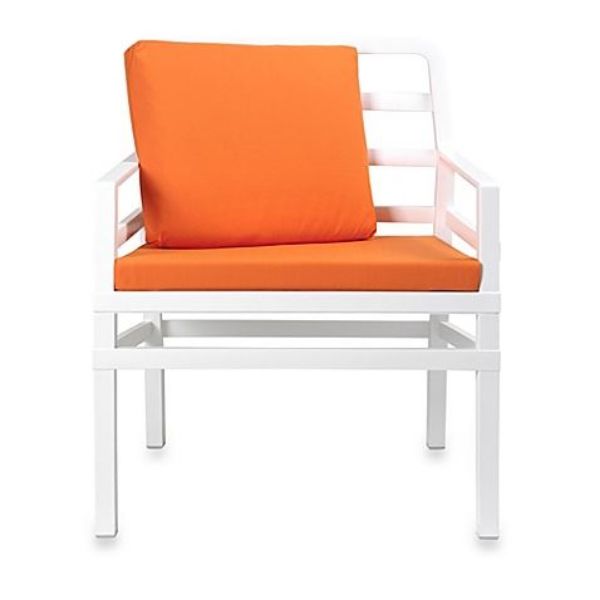
Let cushions dry completely before placing them in a closet, bin, or storage bench. A cushion that feels dry on the outside may still hold moisture in the foam. Press gently in several areas and check for a damp smell. Storing cushions in a breathable bag or keeping them loosely arranged can reduce trapped odors. If furniture for seasonal storage includes both chairs and soft accessories, giving each its own drying time makes the whole setup easier to reopen later.
Check how each chair stacks or nests
Many resin chairs are designed to stack or nest, but that does not mean every piece should be forced into the same arrangement. Check stacking capacity before loading one chair onto another. The shape of the back, arms, and legs determines how well pieces sit together. A proper stack feels stable and does not require extra force.
If chairs resist, stop and look for the reason. Sand, leaves, or a warped part may be blocking the fit. Forcing a stack can scratch surfaces or crack legs. When space is tight, a stable row may be better than a tall stack that leans. Keep heavier pieces low, and avoid placing delicate items on top.
Choose a storage spot with care
A garage, shed, covered patio, or indoor room can all work if the area stays reasonably dry and has some airflow. The best spot protects chairs from heavy rain, direct heat sources, and sharp objects. Avoid leaning chairs against anything unstable, and keep walkways clear so pieces are not knocked over.
For winter storage, think about temperature swings as well as moisture. Resin handles outdoor conditions, but repeated freezing and thawing can be hard on anything already weakened. A sheltered, consistent space is usually kinder than an exposed corner where water collects and refreezes. If the chairs must stay outside, elevate them slightly and leave enough space for air to move around them.
Do a final pass before covering
- Walk around the chairs once more and check for damp spots, loose parts, or debris caught in seams.
- Move each chair gently to confirm it feels stable and does not scrape against a wall or another piece.
- Keep covers loose enough for airflow, especially if the storage area is not climate controlled.
- Place small hardware, cushions, and detachable accessories in a labeled container so they stay with the set.
That last pass is useful because storage problems are often simple ones that went unnoticed in a rush. A chair with a small crack, a cushion that is not fully dry, or a cover pulled too tight can cause avoidable trouble. Taking a few extra minutes at the start helps the furniture come out of storage ready for regular use.
Know what needs professional attention
Most resin chair care is straightforward, but not every issue should be forced. If a piece has a deep structural crack, a warped support, or a fault that affects stability, stop using it and get advice from a qualified repair professional. The same applies if a finish problem keeps spreading despite gentle cleaning. Guessing at repairs can create sharp edges or weak points.
For everyday care, the practical approach is simple: clean gently, dry thoroughly, store with airflow, and check the parts that carry weight. With that routine, resin patio chairs are easier to keep looking neat from one season to the next, whether they are used on a patio, by a pool, in a garden, or in a commercial dining area.